What Is an IP Proxy? Understanding the Basic Concepts and Working Principles of IP Proxies
 October 18.2025
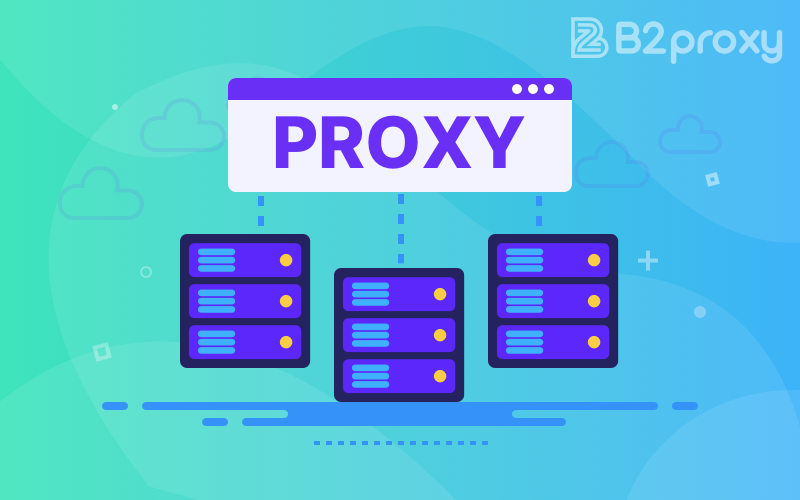
<p>In the field of online security and privacy protection, the term <a href="https://www.b2proxy.com/" rel="noopener noreferrer" target="_blank">Proxy list</a> often appears, yet many people do not fully understand the true concept and mechanism behind IP proxies. An IP proxy is far more than just a tool for hiding IP addresses — it plays a vital intermediary role in data transmission, network communication, and access control. This article will explain the fundamental concepts and working principles of IP proxies from multiple perspectives.</p><p><br></p><p><br></p><h3><strong>1. Basic Definition of an IP Proxy</strong></h3><p>An IP proxy (Proxy Server) is a middle-layer service between the user’s device and the target server. When a user sends a request, it first passes through the proxy server, which then communicates with the target website on the user’s behalf. The website only sees the proxy’s IP instead of the user’s real IP, thus achieving anonymity and masking the true identity of the requester.</p><p><br></p><p><br></p><h3><strong>2. Main Types of IP Proxies</strong></h3><p>Depending on anonymity level and protocol, IP proxies can be categorized as:</p><p>● <strong>Transparent Proxy</strong> – Does not hide the real IP; mainly used for caching or speed improvement.</p><p>● <strong>Anonymous Proxy</strong> – Hides the user’s IP but still identifies as a proxy to the target server.</p><p>● <strong>Elite (High-Anonymity) Proxy</strong> – Completely conceals both the user’s IP and the proxy identity, ideal for privacy protection and data scraping.</p><p>From a protocol perspective, there are HTTP, HTTPS, and <strong>socks5</strong> proxies. Among them, socks5 is widely used due to its flexibility, high security, and compatibility with multiple types of data transmission, making it ideal for encrypted communications and cross-border connections.</p><p><br></p><p><br></p><h3><strong>3. How IP Proxies Work</strong></h3><p>An IP proxy functions as an intermediary node in online communication. When a user’s request is sent through the proxy, it forwards that request to the destination site and then returns the response back to the user. This process hides the user’s real IP, bypasses geographical restrictions, and enhances the stability and security of the connection.</p><p><br></p><p><br></p><h3><strong>4. Common Use Cases of IP Proxies</strong></h3><p>IP proxies are widely used in web marketing, data collection, ad verification, and geo-testing.</p><p>● <strong>Data Scraping:</strong> Using distributed proxy IPs prevents bans caused by excessive requests from a single address.</p><p>● <strong>Account Management:</strong> Enables login from different regions while avoiding account linking and suspension.</p><p>● <strong>Privacy Protection:</strong> Masks the real user location to reduce tracking risks.</p><p>● <strong>Network Optimization:</strong> Uses caching mechanisms to improve speed and access efficiency.</p><p><br></p><p><br></p><h3><strong>Conclusion</strong></h3><p>The essence of IP proxy technology lies in <em>intermediation and masking</em>, enabling users to achieve greater security, stability, and flexibility online. Whether for data acquisition, regional testing, or secure browsing, choosing the right proxy type and node configuration is essential for optimal performance. Ultimately, a reliable and efficient proxy system is incomplete without robust <a href="https://www.b2proxy.com/" rel="noopener noreferrer" target="_blank">socks5</a> support.</p>
You might also enjoy
Proxy Pool Throughput: Concurrency vs Parallelism, Adaptive Control
Optimize proxy pool throughput with concurrency over parallelism. Dynamic concurrency control and unlimited residential sessions boost scraping.
October 13.2026
Unlimited Residential Proxy vs Pay-Per-Traffic: More Cost-Effective? 2026 Proxy Billing Selection Guide
Unlimited proxy vs pay-per-traffic: choose based on task continuity, traffic predictability, and concurrency; hybrid use balances cost and efficiency.
October 13.2026
What Are SEO Proxy Services? How Are They Used for Multi-Region Rank Monitoring?
SEO proxy services route searches via target regions for localized rank monitoring using geo-targeting and session control.
October 12.2026